
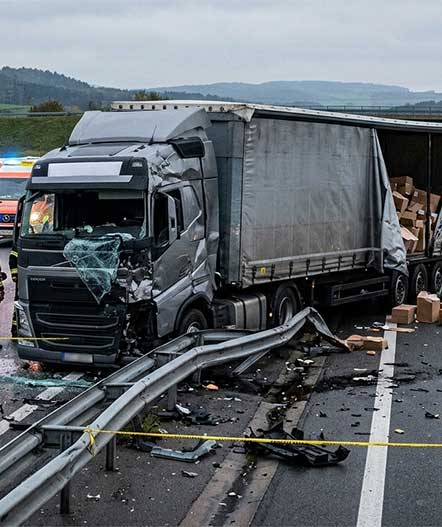
Collisions involving commercial trucks often cause catastrophic injuries due to the size and weight difference between large trucks and passenger vehicles. A fully loaded semi-truck can weigh 80,000 pounds or more, while an average car weighs around 4,000 pounds. When these vehicles collide, the occupants of the smaller vehicle bear the brunt of the impact. If you or a family member has been injured in a truck accident caused by the negligence of a truck driver, trucking company, or another party, you may be entitled to compensation for your medical expenses, lost income, pain and suffering, and other damages. Ray Padilla Law represents truck accident victims throughout San Diego County and Southern California. Contact us today for a free consultation. We provide full legal services in English and Spanish.
Why Truck Accident Cases Are More Complex
Truck accident cases involve considerations that are not present in typical car accident claims. Understanding these complexities is important when pursuing compensation.
Multiple Potentially Liable Parties
Unlike a car accident where the other driver is typically the only defendant, truck accidents may involve multiple parties who share responsibility. These can include the truck driver, the trucking company that employed the driver, the company that loaded the cargo, the truck or parts manufacturer, and maintenance providers. Identifying all responsible parties requires investigation into the relationships and responsibilities of each.
Federal and State Regulations
Commercial trucking is heavily regulated by the Federal Motor Carrier Safety Administration (FMCSA) and California state agencies. These regulations govern how long drivers can operate without rest, how trucks must be maintained, how cargo must be secured, and what qualifications drivers must have. Violations of these regulations can serve as evidence of negligence.
Corporate Legal Resources
Trucking companies and their insurers often have significant legal and financial resources to defend against claims. They may dispatch investigation teams to the accident scene quickly, sometimes before injured victims have had a chance to gather their own evidence. Having legal representation early in the process can help level the playing field.
Higher Insurance Policy Limits
Federal law requires trucking companies to carry higher insurance minimums than passenger vehicles. Trucks transporting general freight must carry at least $750,000 in liability coverage, and trucks carrying hazardous materials must carry between $1 million and $5 million depending on the cargo. While higher policy limits mean more potential compensation is available, insurers will often defend these claims aggressively.
Preservation of Evidence
Commercial trucks are often equipped with electronic logging devices (ELDs), event data recorders (similar to black boxes), and GPS tracking systems that capture important information about the truck's speed, braking, and the driver's hours of service.
Types of Truck Accidents We Handle
Ray Padilla Law represents individuals and families injured in accidents involving various types of commercial trucks, including:
Semi-Truck and Tractor-Trailer Accidents
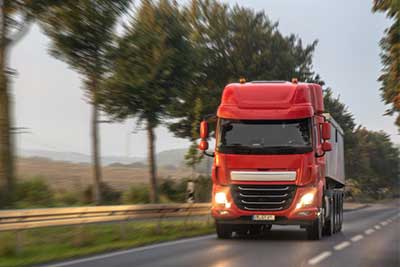
These large combination vehicles are common on San Diego’s freeways, particularly Interstate 5, Interstate 15, and Interstate 8. Their size and limited maneuverability make them prone to serious accidents, especially in heavy traffic or when drivers are fatigued.
Delivery Truck Accidents
The growth of online shopping has increased the number of delivery trucks on San Diego roads. Accidents involving Amazon delivery vans, FedEx trucks, UPS vehicles, and other delivery services raise questions about driver training, delivery schedules, and whether the driver was an employee or independent contractor.
Garbage and Waste Collection Truck Accidents
These trucks make frequent stops and operate in residential neighborhoods where pedestrians and cyclists may be present. Their large blind spots and frequent stopping create hazards for other road users.
Tanker Truck Accidents
Trucks carrying liquids, including fuel, chemicals, and food products, face unique challenges related to liquid surge and shifting cargo weight. Tanker accidents can also create hazardous material spills that endanger others beyond those directly involved in the collision.
Flatbed Truck Accidents
Improperly secured cargo on flatbed trucks can shift or fall off during transit, striking other vehicles or creating road hazards. Cargo securement regulations exist specifically to prevent these accidents.
Construction and Dump Truck Accidents
These heavy vehicles are common in areas with construction activity. They may carry loose materials that can spill onto roadways or have mechanical issues related to their heavy-duty use.
Bus Accidents
Commercial buses, including charter buses, tour buses, and intercity carriers, are subject to many of the same regulations as trucks. Accidents involving these vehicles can injure multiple passengers as well as occupants of other vehicles.
Moving Truck Accidents
Rental moving trucks are often driven by individuals without commercial driving experience. The unfamiliar size and handling characteristics of these vehicles contribute to accidents.
Common Causes of Truck Accidents
Truck accidents result from various forms of negligence. Common causes include:
Driver Fatigue
Federal hours-of-service regulations limit how long truck drivers can operate without rest. Drivers may drive 11 hours after 10 consecutive hours off duty, and they may not drive beyond 14 hours after coming on duty. Despite these rules, some drivers and trucking companies violate them to meet delivery deadlines. Fatigued driving impairs reaction time, judgment, and attention in ways similar to alcohol impairment.
Distracted Driving
Truck drivers may be distracted by GPS devices, dispatch communications, cell phones, eating, or other activities. Federal regulations prohibit commercial drivers from texting or using handheld phones while driving, but violations occur.
Impaired Driving
Commercial drivers are held to stricter standards for alcohol, with a legal limit of 0.04% blood alcohol concentration compared to 0.08% for other drivers. They are also subject to drug testing requirements. Impaired driving by a commercial driver can support claims for punitive damages.
Speeding and Aggressive Driving
Large trucks require significantly more distance to stop than passenger vehicles. A truck traveling at highway speed may need the length of two football fields to come to a complete stop. Speeding reduces the available stopping distance and increases the severity of collisions.
Improper Loading
Cargo that is overweight, unevenly distributed, or improperly secured can cause a truck to become unstable, leading to rollovers, jackknife accidents, or lost cargo. Federal regulations establish weight limits and securement requirements, and violations can establish negligence.
Inadequate Maintenance
Trucking companies are required to regularly inspect and maintain their vehicles. Brake failures, tire blowouts, steering problems, and lighting defects can all cause or contribute to accidents. Maintenance records can reveal whether a trucking company failed to address known mechanical issues.
Inadequate Training
Commercial truck drivers must hold a commercial driver's license (CDL) and meet certain training requirements. Some trucking companies, facing driver shortages, may put inadequately trained drivers behind the wheel.
Blind Spot Accidents
Large trucks have significant blind spots on all four sides, often called "no-zones." Drivers who fail to properly check these areas before changing lanes or turning may strike vehicles they cannot see.
Jackknife Accidents
When a truck's trailer swings outward to form a 90-degree angle with the cab, it can sweep across multiple lanes of traffic. Jackknife accidents often result from sudden braking, slippery roads, or equipment failures.
Rollover Accidents
Trucks with high centers of gravity can roll over when taking curves too fast, when cargo shifts, or when drivers overcorrect after leaving the roadway. Rollovers can crush smaller vehicles and block entire roadways.
Wide Turn Accidents
Trucks making right turns often swing left first to create room for the turn. This maneuver can trap vehicles between the truck and the curb or result in collisions with vehicles in adjacent lanes.
Who May Be Liable in a Truck Accident
Determining liability in a truck accident requires examining the relationships and responsibilities of multiple parties. Those who may bear responsibility include:
The Truck Driver
If the driver was negligent through speeding, distracted driving, fatigue, impairment, or other unsafe conduct, they may be personally liable. Evidence may include the driver's logs, cell phone records, drug and alcohol test results, and witness statements.
The Trucking Company
Under the legal doctrine of respondeat superior, employers can be held liable for the negligent acts of their employees performed within the scope of employment. Trucking companies may also be directly liable for negligent hiring, inadequate training, failure to enforce safety regulations, or pressure on drivers to violate hours-of-service rules. Even when drivers are classified as independent contractors, the trucking company may still bear responsibility depending on the level of control it exercises.
The Cargo Loading Company
If improperly loaded or secured cargo contributed to the accident, the company responsible for loading may share liability. This could be the trucking company itself, a third-party logistics provider, or the shipper.
The Truck or Parts Manufacturer
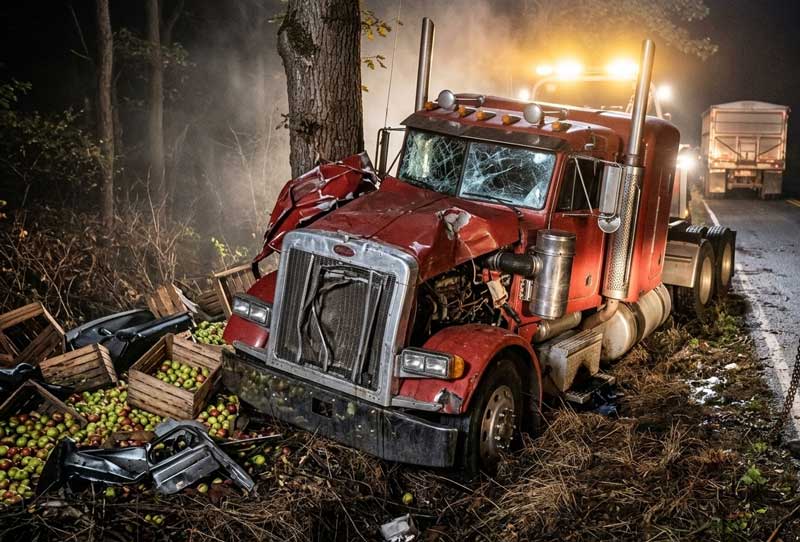
If a defective truck component such as brakes, tires, steering, or coupling devices caused or contributed to the accident, the manufacturer may be liable under product liability theories.
The Truck or Parts Manufacturer
If a defective truck component such as brakes, tires, steering, or coupling devices caused or contributed to the accident, the manufacturer may be liable under product liability theories.
Maintenance Providers
If a third-party maintenance company failed to properly inspect, repair, or maintain the truck, leading to a mechanical failure, that company may share liability.
Government Entities
If a dangerous road condition such as inadequate signage, defective traffic signals, or poorly designed roadways contributed to the accident, a government entity responsible for road maintenance may bear some responsibility. Claims against government entities are subject to special procedural requirements and shorter deadlines.
Federal Trucking Regulations
The Federal Motor Carrier Safety Administration (FMCSA) establishes regulations that govern commercial trucking. Violations of these regulations can serve as evidence of negligence. Key regulations include:
Hours of Service (49 CFR Part 395)
These rules limit driving time to prevent fatigue-related accidents. Drivers may drive a maximum of 11 hours after 10 consecutive hours off duty. They may not drive beyond the 14th consecutive hour after coming on duty. Drivers must take a 30-minute break after 8 cumulative hours of driving. Weekly limits cap driving at 60 hours in 7 days or 70 hours in 8 days.
Electronic Logging Devices (49 CFR Part 395.8)
Most commercial trucks are required to use ELDs to automatically record driving time, making it harder to falsify logs. ELD data can provide important evidence about whether a driver exceeded hours-of-service limits.
Drug and Alcohol Testing (49 CFR Part 382)
Commercial drivers are subject to pre-employment drug testing, random testing, post-accident testing, and testing based on reasonable suspicion. The blood alcohol limit for commercial drivers is 0.04%, half the limit for other drivers.
Vehicle Maintenance (49 CFR Part 396)
Trucking companies must systematically inspect, repair, and maintain their vehicles. They must keep records of inspections and repairs. Drivers must conduct pre-trip and post-trip inspections and report any defects.
Cargo Securement (49 CFR Part 393)
Regulations specify how different types of cargo must be secured to prevent shifting or falling during transport. Violations can establish negligence if unsecured cargo causes an accident.
Driver Qualification (49 CFR Part 391)
Trucking companies must verify that drivers meet minimum qualifications, including holding a valid CDL, having adequate driving experience, passing medical examinations, and having an acceptable driving record.
Evidence used to establish fault may include police reports, witness statements, photographs of the accident scene, vehicle damage, traffic camera footage, cell phone records, and expert testimony from accident reconstructionists.
Common Injuries in Truck Accidents
Due to the forces involved, truck accident injuries are often severe or catastrophic. Common injuries include:

Traumatic Brain Injuries
The violent impact of a truck collision can cause concussions, contusions, or more severe brain injuries. Effects can range from temporary symptoms to permanent cognitive impairment, personality changes, and disability.
Spinal Cord Injuries
Damage to the spinal cord can result in partial or complete paralysis. Victims may require lifelong medical care, assistive devices, and home modifications.
Multiple Fractures
The crushing forces in truck accidents frequently cause broken bones throughout the body. Complex fractures may require multiple surgeries and extended rehabilitation.
Internal Organ Damage
Blunt force trauma can damage the liver, spleen, kidneys, lungs, and other organs. Internal bleeding may not be immediately apparent and can be life-threatening.
Crush Injuries
When smaller vehicles are compressed by truck collisions, occupants may suffer crush injuries to limbs and torso, potentially requiring amputation.
Severe Burns
Truck accidents involving fuel spills or hazardous materials can cause severe burns requiring extensive treatment and resulting in permanent scarring.
Wrongful Death
Tragically, many truck accidents result in fatalities. Surviving family members may pursue wrongful death claims to recover compensation for their losses.
Compensation in Truck Accident Cases
Victims of truck accidents may be entitled to compensation for:
Medical Expenses
All past and future medical costs related to your injuries, including emergency care, hospitalization, surgery, rehabilitation, medications, medical equipment, and long-term care needs.
Lost Income
Wages lost during recovery and, if your injuries affect your ability to work long-term, loss of future earning capacity.
Pain and Suffering
Compensation for physical pain, emotional distress, anxiety, depression, loss of enjoyment of life, and other non-economic damages.
Permanent Disability
Additional compensation if your injuries result in permanent impairment, disfigurement, or loss of bodily function.
Property Damage
The cost to repair or replace your vehicle and personal property.
Wrongful Death Damages
If a loved one died in a truck accident, surviving family members may recover funeral and burial expenses, loss of the deceased's expected income, loss of companionship and support, and other damages.
Because truck accidents often cause catastrophic injuries, the total compensation in these cases can be substantial. The higher insurance minimums required for commercial trucks mean there may be more coverage available than in typical car accident cases.
Frequently Asked Questions
What should I do after a truck accident?
If you are able, call 911 and seek immediate medical attention. Document the scene by taking photographs of vehicle damage, the accident location, any visible injuries, and the truck’s markings and license plate. Obtain the truck driver’s name, employer information, and insurance details. Get contact information from witnesses. Avoid giving recorded statements to insurance companies before consulting with a lawyer. Because evidence in truck accidents can be lost quickly, contacting an attorney promptly is advisable.
How is a truck accident case different from a car accident case?
Truck accident cases often involve multiple liable parties, federal and state regulations, higher insurance policy limits, and more aggressive defense tactics from trucking companies and their insurers. The severity of injuries is typically greater, and the investigation required to build a strong case is more extensive.
Who can be held liable for a truck accident?
Depending on the circumstances, liable parties may include the truck driver, the trucking company, the cargo loading company, the truck or parts manufacturer, maintenance providers, and in some cases government entities. An investigation is needed to determine which parties bear responsibility.
How long do I have to file a lawsuit after a truck accident?
In California, you generally have two years from the date of the accident to file a personal injury lawsuit (California Code of Civil Procedure Section 335.1). If your claim involves a government entity, you must file an administrative claim within six months. Wrongful death claims generally must be filed within two years of the date of death. Because important evidence can be lost and deadlines can be missed, consulting with an attorney promptly is advisable.
What if the trucking company's insurance adjuster contacts me?
You are not required to give a recorded statement to the trucking company’s insurer. Insurance adjusters work for the insurance company, not for you, and their goal is to minimize the company’s payout. It is generally advisable to consult with a lawyer before providing any statements or accepting any settlement offers.
How much does it cost to hire a truck accident lawyer?
Ray Padilla Law handles truck accident cases on a contingency fee basis. You pay no attorney fees unless we obtain a recovery on your behalf. If there is no recovery, you owe no attorney fees. Clients may be responsible for case costs and expenses regardless of outcome. We will explain all fee arrangements during your free consultation.
What is the value of my truck accident case?
The value of a truck accident case depends on many factors, including the severity of your injuries, the cost of your medical treatment, the impact on your ability to work, the degree of pain and suffering you experience, and the available insurance coverage. Because every case is different, it is not possible to estimate the value of a specific case without reviewing the facts and circumstances.

Contact a San Diego Truck Accident Lawyer
If you or a family member has been injured in a truck accident in San Diego County, contact Ray Padilla Law for a free consultation. We will review the facts of your case, explain your legal options, and answer your questions. There is no obligation, and you will pay no attorney fees unless we recover compensation for you.
We are available 24 hours a day, 7 days a week. Se habla español.
This website contains attorney advertising. The information on this website is for general informational purposes only and does not constitute legal advice. Contacting Ray Padilla Law does not create an attorney-client relationship. Do not send confidential information until an attorney-client relationship has been established.