
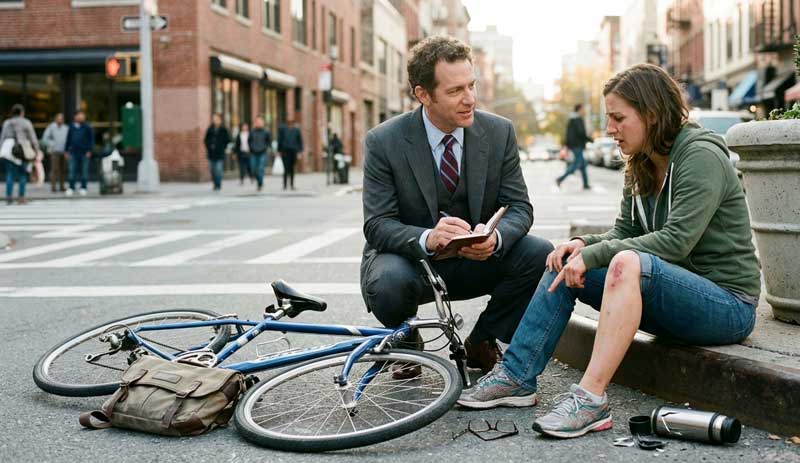
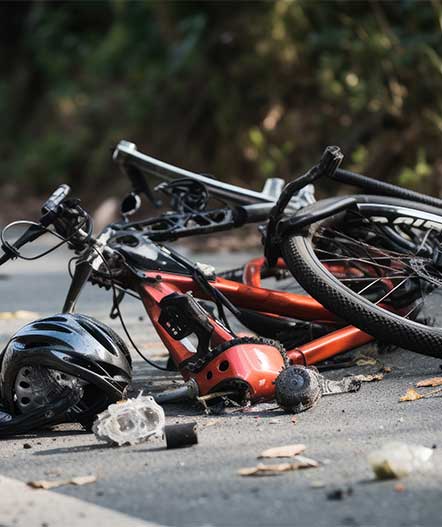
Bicycle and pedestrian accidents in San Diego County frequently result in serious, life-changing injuries. Unlike vehicle occupants, cyclists and pedestrians have virtually no structural protection when struck by a car, truck, or rideshare vehicle. Ray Padilla Law, APC represents individuals injured in bicycle and pedestrian collisions throughout San Diego County and across California. Founded in 2016 by California licensed attorney Ray Padilla (admitted 2012), the firm takes a strategic, trial-ready approach to these cases, focusing on thorough investigation, accurate liability analysis, and careful damages documentation to position each claim for the strongest possible resolution.
Key Takeaways
Bicycle and pedestrian accidents often produce catastrophic injuries including traumatic brain injuries, spinal cord damage, and fractures due to the lack of occupant protection.
California law provides specific protections for cyclists and pedestrians, including right-of-way rules under the California Vehicle Code.
Comparative fault applies in California, meaning an injured cyclist or pedestrian may still recover damages even if partially at fault.
Insurance coverage analysis in these cases can involve the at-fault driver's policy, the injured person's own UM/UIM coverage, and potentially third-party liability.
Ray Padilla Law prepares every bicycle and pedestrian injury case with trial readiness in mind, which strengthens settlement negotiation leverage.
What Makes Bicycle and Pedestrian Accident Cases Different from Car Accident Claims?
Bicycle and pedestrian accident cases differ from standard car accident claims because the injured person lacks the protective enclosure of a vehicle. This typically results in more severe injuries, higher medical costs, longer recovery periods, and more complex damages calculations. Liability analysis also involves specific California Vehicle Code provisions that govern driver responsibilities toward cyclists and pedestrians.
In a car-on-car collision, both parties benefit from airbags, seatbelts, and the structural integrity of the vehicle. In bicycle and pedestrian accidents, the injured person absorbs the full force of the impact. Common injuries include traumatic brain injuries, spinal cord damage, pelvic fractures, road rash requiring skin grafting, and internal organ injuries. In the most severe cases, these collisions result in wrongful death.
From a legal and insurance perspective, bicycle and pedestrian cases also present unique challenges. Drivers and their insurers frequently argue that the cyclist or pedestrian was at fault for the collision, whether by alleging failure to use a crosswalk, riding outside a bike lane, or ignoring a traffic signal. California’s pure comparative fault system means that even if the injured person bears some responsibility, their recovery is reduced by their percentage of fault rather than eliminated entirely.
What Are the Most Common Types of Bicycle and Pedestrian Accidents in San Diego?
The most common bicycle and pedestrian accidents in San Diego County include dooring collisions, crosswalk strikes, bike lane intrusions, right-hook and left-turn collisions, parking lot incidents, and accidents involving rideshare vehicles. Each type involves distinct liability and evidence considerations.
| Accident Type | Description | Key Legal Considerations |
|---|---|---|
| Dooring | Driver or passenger opens vehicle door into path of cyclist | CVC 22517 prohibits opening doors into traffic; often produces sudden impact injuries |
| Crosswalk Strike | Driver fails to yield to pedestrian in marked or unmarked crosswalk | CVC 21950 requires drivers to yield; high severity due to pedestrian vulnerability |
| Right-Hook Collision | Driver turns right across bike lane or cyclist's path | Cyclist is often in driver's blind spot; intersection cameras and witness testimony are critical |
| Left-Turn Collision | Driver turns left and strikes oncoming cyclist or pedestrian | Common at unprotected intersections; driver typically has duty to yield |
| Bike Lane Intrusion | Driver enters designated bike lane and strikes cyclist | CVC 21209 restricts vehicle entry into bike lanes; road markings are key evidence |
| Parking Lot Incident | Pedestrian struck by vehicle in commercial or residential parking lot | Lower speeds but limited visibility; security camera footage often available |
| Rideshare-Involved | Cyclist or pedestrian struck by or near a rideshare vehicle | Multiple insurance coverage layers may apply depending on app status at time of collision |
San Diego’s combination of urban density, coastal bike paths, tourist traffic, and active rideshare use creates conditions where these accidents are especially common in areas like Pacific Beach, downtown San Diego, the Gaslamp Quarter, and along the Coast Highway corridor in North County. [Internal link: service areas]
How Does California Law Protect Cyclists and Pedestrians?
California law establishes specific duties that drivers owe to cyclists and pedestrians. The California Vehicle Code includes provisions governing safe passing distances for bicycles, pedestrian right-of-way at crosswalks, and driver responsibilities at intersections. Violations of these rules can establish negligence in an injury claim.
Several California Vehicle Code provisions are directly relevant to bicycle and pedestrian accident claims:
Three-Foot Passing Rule (CVC 21760)
Drivers must maintain at least three feet of clearance when passing a bicycle proceeding in the same direction. If three feet is not possible due to road conditions, the driver must slow to a reasonable and prudent speed and pass only when doing so does not endanger the cyclist.
Pedestrian Right-of-Way at Crosswalks (CVC 21950)
Drivers must yield the right-of-way to pedestrians crossing within any marked or unmarked crosswalk at an intersection. Drivers approaching a pedestrian in a crosswalk must exercise all due care and reduce speed or stop as necessary to safeguard the pedestrian.
Bike Lane Protections (CVC 21209)
Driving or parking in a designated bicycle lane is prohibited except in limited circumstances, such as entering or leaving a driveway, preparing for a turn, or when directed by an officer.
Bicycle Operation Rules (CVC 21200)
A person riding a bicycle on a highway has all the rights and is subject to all the provisions applicable to the driver of a vehicle, with certain exceptions. This means cyclists have a legal right to use the roadway and are owed the same duty of care as other vehicle operators.
When a driver violates any of these provisions and that violation contributes to an accident, the violation can serve as evidence of negligence in a personal injury claim. However, establishing liability requires a complete analysis of all facts, including road conditions, visibility, signage, and the conduct of both parties.
What Damages Can Be Recovered in a Bicycle or Pedestrian Accident Claim?
Damages in a California bicycle or pedestrian accident claim generally fall into two categories: economic damages (medical expenses, lost wages, future care costs) and non-economic damages (pain and suffering, loss of enjoyment of life). In cases involving fatalities, wrongful death damages may also be available.

Because bicycle and pedestrian accidents tend to produce more severe injuries than vehicle-on-vehicle collisions, the damages in these cases are often substantial. Economic damages may include emergency room treatment, surgeries, rehabilitation, assistive devices, home modifications, and lost earning capacity. Non-economic damages account for the physical pain, emotional distress, and diminished quality of life resulting from the injuries.

In cases involving drunk driving, distracted driving, or other egregious conduct, punitive damages may also be available under California Civil Code section 3294. Punitive damages require proof of malice, oppression, or fraud by clear and convincing evidence and are determined on a case-by-case basis.
How Does Insurance Coverage Work in a Bicycle or Pedestrian Accident Case?
Insurance coverage in bicycle and pedestrian cases may involve multiple sources: the at-fault driver’s liability policy, the injured person’s own uninsured or underinsured motorist (UM/UIM) coverage, medical payments coverage, and potentially health insurance subrogation. Strategic coverage analysis is essential to identifying all available recovery pathways.
A common challenge in these cases is that the at-fault driver's liability policy may not fully cover the injured person's damages, particularly in catastrophic injury situations. When this happens, the injured person's own UM/UIM coverage can serve as an additional source of recovery if the at-fault driver is uninsured or underinsured.
For accidents involving rideshare vehicles, additional insurance layers may apply depending on whether the rideshare driver had the app on, was en route to a pickup, or had a passenger at the time of the collision. These coverage distinctions require careful analysis. [Internal link: rideshare accident lawyer] [Internal link: how car insurance claims work in California]
What Steps Should You Take After a Bicycle or Pedestrian Accident in San Diego?
After a bicycle or pedestrian accident, the priority is medical attention, followed by evidence preservation, documentation of the scene, and early contact with an attorney before engaging with insurance adjusters.

Seek medical attention immediately, even if injuries seem manageable. Many bicycle and pedestrian injuries, including head trauma and internal bleeding, may not present obvious symptoms at the scene.

Call law enforcement and ensure an official report is filed. The police report creates a foundational record of the accident circumstances and parties involved.

Preserve evidence at the scene if physically able. Photograph the accident location, vehicle positions, traffic signals, road conditions, your bicycle or equipment, and any visible injuries.

Collect contact and insurance information from all involved drivers and witnesses.

Avoid providing recorded statements to any insurance company before consulting with an attorney. Early statements can be used to minimize your claim.

Contact a personal injury attorney to discuss your case. An attorney experienced in bicycle and pedestrian accidents can begin evidence preservation, identify all insurance coverage sources, and protect your interests. [Internal link: what to do after a car accident in San Diego]
Ray Padilla on Bicycle and Pedestrian Injury Cases
Bicycle and pedestrian cases require a different investigative approach than a standard car accident claim. When I evaluate these cases, I focus heavily on scene reconstruction, because the physical evidence, including skid marks, point of impact, surveillance footage, and road design, often tells a different story than the driver’s initial account. I have seen cases where the driver claimed the cyclist appeared out of nowhere, but traffic camera footage and road geometry showed the cyclist was visible for several seconds before impact. That kind of evidence changes the trajectory of a case. I also pay close attention to the full scope of medical treatment, because these injuries frequently require long-term rehabilitation and future care that must be accurately projected before any settlement discussion.
Why Choose Ray Padilla Law for a Bicycle or Pedestrian Accident Case?
Ray Padilla Law, APC takes a selective approach to case intake, focusing on serious injury cases that benefit from thorough preparation and individualized attention. For bicycle and pedestrian accident claims in San Diego County, that approach includes:

Direct access to Ray Padilla throughout the case, from initial evaluation through resolution.

Detailed scene investigation and evidence preservation, including securing surveillance footage, traffic signal data, and witness statements.

Strategic insurance coverage analysis to identify every available source of recovery.

Litigation readiness: every case is prepared as if it may proceed to trial, which strengthens negotiation leverage.

Bilingual legal services in English and Spanish to serve San Diego County's diverse communities.
Frequently Asked Questions
What should I do if I was injured as a rideshare passenger?
Under California Code of Civil Procedure section 335.1, the standard statute of limitations for a personal injury claim is two years from the date of the accident. If the accident involves a government entity, such as a city-maintained road, shorter deadlines under the Government Claims Act may apply. Specific facts can affect these deadlines.
Can I still recover damages if I was partially at fault for the accident?
Yes. California follows a pure comparative fault rule, meaning your recovery is reduced by your percentage of fault but not eliminated. For example, if you are found 20 percent at fault, your damages award would be reduced by 20 percent.
What if the driver who hit me was uninsured?
You may be able to recover through your own uninsured motorist (UM) coverage if you have it. An attorney can review your available coverage options and identify additional recovery sources.
Do bicycle accident cases settle or go to trial?
Many bicycle and pedestrian accident cases resolve through negotiated settlement, but not all. Ray Padilla Law prepares every case with trial readiness in mind. If a fair settlement cannot be reached, the firm is prepared to litigate.
What if the accident happened in a bike lane?
If a driver entered a designated bike lane and caused a collision, that may constitute a violation of California Vehicle Code section 21209. Violations of traffic laws can serve as evidence of negligence, but a full liability analysis considers all contributing factors.
Can I file a claim if a car door opened into my path while I was cycling?
Yes. Dooring accidents are a recognized category of bicycle collision in California. California Vehicle Code section 22517 prohibits opening a vehicle door into moving traffic unless it is reasonably safe to do so.
What types of compensation are available in a pedestrian accident case?
Compensation may include medical expenses, lost wages, future medical care, pain and suffering, and loss of enjoyment of life. In wrongful death cases, additional categories of damages may be available to surviving family members.
Does Ray Padilla Law handle e-scooter and e-bike accident cases?
Yes. E-scooter and e-bike accidents involve many of the same legal principles as traditional bicycle and pedestrian cases, with additional considerations related to the vehicle operators and rental company liability.

Request a Confidential Case Evaluation
If you or a family member has been injured in a bicycle or pedestrian accident in San Diego County, Ray Padilla Law, APC can evaluate your situation and explain your legal options under California law. Contact the firm by calling (619) 431-1187 or submitting the online contact form to schedule a consultation.
Before speaking with an insurance adjuster or accepting any offer, it can be helpful to understand how your claim is valued and what steps may protect your interests. Our office can walk you through the process and answer your questions.